
Colostrum Supplements Under the Microscope: Social Listening Insights from the U.S. Wellness Conversation
Summary
The meteoric rise of colostrum supplements from a niche product to a mainstream wellness sensation, propelled by celebrity endorsements and biohacking communities, masks a deeply polarized consumer conversation. While advocates laud its purported benefits for gut health, skin, and muscle recovery, a substantial 20% of social mentions reveal sharp skepticism regarding its high cost, ethical sourcing, and the scientific validity of its claims. This dynamic, where awareness is high but trust remains fragile and campaign-driven, underscores a critical challenge for wellness brands: navigating a landscape where rapid visibility can equally fuel both enthusiastic adoption and intense backlash, demanding transparent education and ethical practices for sustainable growth.
Colostrum Supplements Under the Microscope: Social Listening Insights from the U.S. Wellness Conversation
Colostrum supplements have rapidly moved from niche agricultural byproduct to a mainstream wellness trend. Driven by celebrity endorsements, biohacking communities, and aggressive brand marketing, the category has sparked high engagement — and equally high controversy.
Using U.S.-focused social listening data from the last 12 months, this analysis explores how consumers talk about colostrum supplements, what drives belief and skepticism, and why the conversation has become so polarized.
Conversation Volume and Momentum
Over the past year, colostrum supplements generated approximately 73,700 social mentions in the U.S., with visible spikes tied to influencer campaigns and viral wellness content
Daily mention trends show recurring surges rather than steady organic growth, suggesting the category is campaign-driven, not habit-driven. These spikes often coincide with:
- Celebrity endorsements
- Podcast advertising
- Viral TikTok or Instagram wellness routines
This pattern signals strong awareness — but fragile long-term trust.
Sentiment Breakdown: A Highly Polarized Category
Sentiment toward colostrum supplements is sharply divided:
- ~74% Neutral – informational posts, product mentions, or second-hand discussion
- ** ~20% Negative – skepticism, ethical criticism, cost complaints
- ~6% Positive – strong personal testimonials and advocacy
Unlike many supplement categories, colostrum inspires extreme positions. Users either frame it as a “miracle missing link” or dismiss it as “snake oil”
What’s Driving the Hype?
Celebrity and Influencer Endorsements
High-profile figures play an outsized role in shaping the conversation:
- Kourtney Kardashian and Kim Kardashian promoted Lemme Colostrum, framing it around glowing skin, hair health, and gut support
- Megyn Kelly and Tucker Carlson were heavily associated with Cowboy Colostrum, tying it to immunity and “Western wellness” identity
- Dua Lipa, Sofia Richie Grainge, and Bethenny Frankel appeared in lifestyle content featuring colostrum in smoothies and morning routines
These endorsements helped push colostrum into beauty, glow, and gut-health narratives, accelerating mainstream curiosity
Biohackers, Fitness, and “Optimization Culture”
Beyond celebrity wellness, biohacking communities and fitness enthusiasts were major contributors:
- Colostrum discussed as a tool to boost IGF-1 (Insulin-like Growth Factor 1) for muscle growth and recovery
- Frequently “stacked” with creatine, collagen, electrolytes, raw milk, and organ meats
- Morning “anabolic cocktails” framed as solutions for leaky gut, chronic bloating, or low energy
Brands Shaping the Category
Several brands dominate consumer awareness:
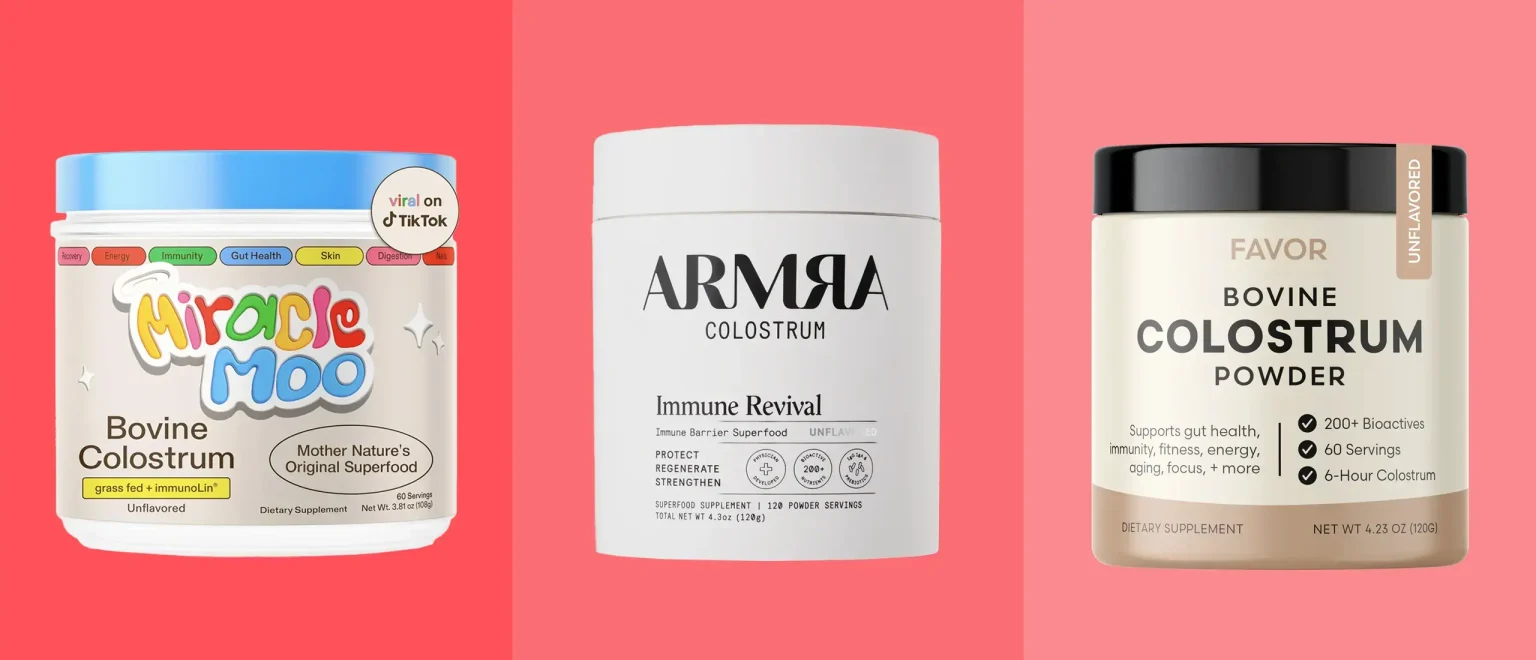
- ARMRA – Positioned as a premium category leader, reframing colostrum as a “superfood” through cold-chain technology, heavy social media spend, and out-of-home advertising
- Cowboy Colostrum – Markets colostrum as “liquid gold,” leveraging Western aesthetics and conservative media audiences
- Erewhon – Elevated colostrum into a status symbol via expensive, celebrity-endorsed smoothies
These strategies helped mainstream colostrum — but also intensified backlash around price, authenticity, and ethics
The Skeptic Backlash: Cost, Ethics, and Science
A substantial portion of the conversation is critical:
1. Price and Value
Many users argue that branded colostrum is simply “powdered cow’s milk” sold at extreme markups. Savvier shoppers often advise buying generic or bulk versions instead of influencer-backed brands.
2. Ethics and Animal Welfare
Animal welfare advocates questioned the morality of harvesting colostrum, arguing it may deprive newborn calves of essential immune protection.
3. Medical Skepticism
Dietitians and institutions like Mayo Clinic appear in discussions urging caution, noting that scientific evidence does not always match marketing claims.
4. Product Complaints
One recurring flashpoint involves InfoWars–associated products, where verified buyers complain that expensive colostrum jars arrive less than half full, fueling anger and fraud accusations
Unexpected Growth Area: Pets, Not People
One of the most overlooked insights is the large volume of pet-related discussion. Consumers frequently reference:
- Colostrum chews and powders for dogs and cats
- Claims of reduced allergies and improved digestion
This suggests that pet wellness may be a more trusted and less controversial application than human supplementation — a notable opportunity for brands watching adjacent markets
What This Means for Wellness Brands
The colostrum conversation reveals a category at risk of overheating:
- Awareness is high, but trust is fragile
- Influencer-led growth fuels visibility and skepticism simultaneously
- Ethical, scientific, and pricing concerns are becoming louder
Brands that rely solely on hype risk rapid backlash. Long-term winners will need credible education, transparent sourcing, and restraint in claims.
About RILA Global Consulting
At RILA Global Consulting, we combine advanced social listening and consumer research to decode what consumers are saying — and why they feel that way. From wellness and consumer goods to energy and public policy, we help organizations navigate polarized narratives and emerging risks.
We’ve supported brands and institutions in:
- Understanding hype cycles vs. durable demand
- Identifying reputational and ethical fault lines
- Translating online discourse into actionable strategy
Whether you’re launching a new wellness product or stress-testing an existing category, RILA helps turn insight into action.
👉 Ready to understand what your consumers really think — beyond the hype?
Contact RILA Global Consulting to start driving results today.
Read More

AI Backlash and Platform Switching: What 245K Conversations Reveal About Consumer Sentiment Toward AI
A recent analysis of 245,000 online conversations indicates a significant "AI backlash," revealing a profound evolution in consumer sentiment that goes beyond technological interest. Users are increasingly voicing ethical concerns about AI governance, surveillance, and potential military applications, while simultaneously actively experimenting with and switching between various AI platforms like Claude, Gemini, and Grok, rather than committing to a single system. This dynamic environment, characterized by intense performance comparisons and emerging protest language, underscores that future AI adoption and platform loyalty will be critically shaped by institutional trust, ethical alignment, and transparent performance, alongside technological capability.
March 6, 2026
READ MORE

U.S. Gold and Silver Sentiment Shift: What the Latest Price Shock Reveals About Safe-Haven Confidence
The article analyzes a significant surge in U.S. digital conversations around gold and silver from Jan 28 to Feb 3, 2026, following a sharp price correction. It reveals a critical shift in safe-haven confidence, with 72% increased volume and 94% more unique authors. While the dominant sentiment was neutral (64%) reflecting an "explanation phase," a substantial 34% expressed negative sentiment tied to trust and perceived instability, questioning the reliability of these traditional safe-haven assets. This indicates a market attentive to doubt rather than panic, prompting financial brands to reinforce long-term theses and build credibility through transparency and education as retail discourse becomes more structurally literate.
February 28, 2026
READ MORE

Consumer Voice Amid Shein Expansion: What the Latest Conversation Signals About Fast Fashion’s Future
As Shein continues its physical expansion into Europe, consumer conversation online reveals a critical re-evaluation of fast fashion, moving beyond mere affordability to encompass quality, sustainability, and operational reliability. The 9% rise in mentions is driven by scrutiny rather than celebration, with a significant portion of dialogue focusing on product longevity, ethical concerns like textile waste, and service frustrations. This signals a strategic inflection point where consumers are redefining value, prioritizing durable investment pieces over frequent, low-cost purchases, prompting a broader industry shift toward responsibility and resilience.
February 28, 2026
READ MORE

U.S. Spirit Airlines Restructuring Signals: What the Latest Conversation Shift Means for Airlines and Travel Brands
The recent 40% surge in conversation around Spirit Airlines, driven by the sale of 20 Airbus aircraft and the recall of 500 flight attendants, signals a critical shift from expansion to stabilization within the airline industry. While financial restructuring may improve liquidity for investors, the narrative for consumers remains focused on asset sales and past instability, framing Spirit more as a financial turnaround story than a growing airline. This redefines brand perception, emphasizing that in the travel sector, consumer confidence and perceived reliability—rather than just price or balance sheet health—are the ultimate drivers of booking decisions and strategic success for airlines and travel brands alike.
February 20, 2026
READ MORE

Inflation, Mortgage Rates, and the Cost-of-Living Crisis: What 436,000 Consumer Conversations Reveal About Household Stress
The article, drawing insights from over 436,000 consumer conversations, reveals the profound personal and politicized impact of inflation, rising mortgage rates, and the broader cost-of-living crisis on household stress. It highlights persistent anxiety over housing and grocery costs, the behavioral shifts driven by near-6% mortgage rates, the frustration with health insurance bills, and the generational burden of expenses, particularly on younger demographics. Furthermore, it uncovers how automobile costs weigh heavily on families and how even gas prices become intertwined with political narratives, ultimately shaping consumer confidence and spending patterns in crucial sectors from retail to automotive.
February 16, 2026
READ MORE

Coca-Cola in Q4 and Q1: What 3.5 Million Conversations Reveal About Brand Power, Pricing, and Consumer Risk
The article analyzes 3.5 million social media conversations about Coca-Cola in Q4 and Q1, revealing critical insights into brand power, pricing, and consumer risk. Key findings highlight the importance of consistent product experience, the tension between sustainability and sensory perception, the significant role of emotional equity and nostalgia, the backlash against AI-generated advertising, and the embedded nature of social/political risk. It also contrasts consumer sentiment with investor perspectives, emphasizing that true brand strength is measured not just by pricing power but by underlying volume, serving as a proxy for broader consumer resilience.
February 16, 2026
READ MORE

Dior in 2026: Luxury as Experience, Status, and Store of Value
The article analyzes Dior's brand perception in 2026, revealing that luxury consumers now value immersive experiences, personalized service, and a brand's stability as a "store of value" in the resale market, alongside traditional craftsmanship and emotional connection. While high-end couture justifies its price, the ready-to-wear segment faces scrutiny over quality and value, and price escalation creates tension, underscoring that successful luxury brands must balance aspirational storytelling with rational justification and tangible value in an increasingly transparent market.
February 16, 2026
READ MORE

Valentine’s Day 2026: What 1.59 Million Conversations Reveal About Love, Pressure, and Pre-Holiday Spending
Analyzing 1.59 million social media mentions, RILA uncovers a delicate balance between genuine optimism for celebration and significant undercurrents of pressure, financial anxiety, and skepticism towards commercialization. Brands are urged to move beyond generic romantic messaging, focusing instead on inclusivity, addressing economic realities, expanding beyond traditional gender roles (especially regarding gifts for men), and creating shareable experiences, while also being mindful of potential reputational risks from tone-deaf campaigns or the rise of romance scams. This highlights that Valentine's Day is not merely a sales event but a deeply personal sentiment event, demanding sophisticated, emotionally intelligent marketing strategies to truly connect with a diverse audience.
February 16, 2026
READ MORE
U.S. Consumer Confidence Shifted in January 2026: What Social Media Conversations Revealed About Household Pressure
In January 2026, U.S. consumer confidence experienced a notable decline, a shift social media conversations revealed wasn't due to a singular economic event but a confluence of interlocking financial pressures. This "stacked-pressure moment" highlighted how rising healthcare costs, persistent grocery inflation, unyielding fixed bills, and increasing reliance on credit cards for essentials combined to create a sense of financial brittleness, leaving households with little room to absorb further economic shocks and amplifying widespread anxiety about their immediate and future financial stability.
February 4, 2026
READ MORE